IoT · Dashboard · Kiosk · Telephony
Solo-EntwicklungInformation Board with Telephony
An interactive IoT information board for the reception of the Army Logistics Center Othmarsingen (ALC-O). On a touch kiosk, visitors find a digital campus map, up to date information in widgets and can call their contact person with one tap. This makes the first impression on site modern, clear and welcoming.
- Angular
- NestJS
- Electron
- IoT
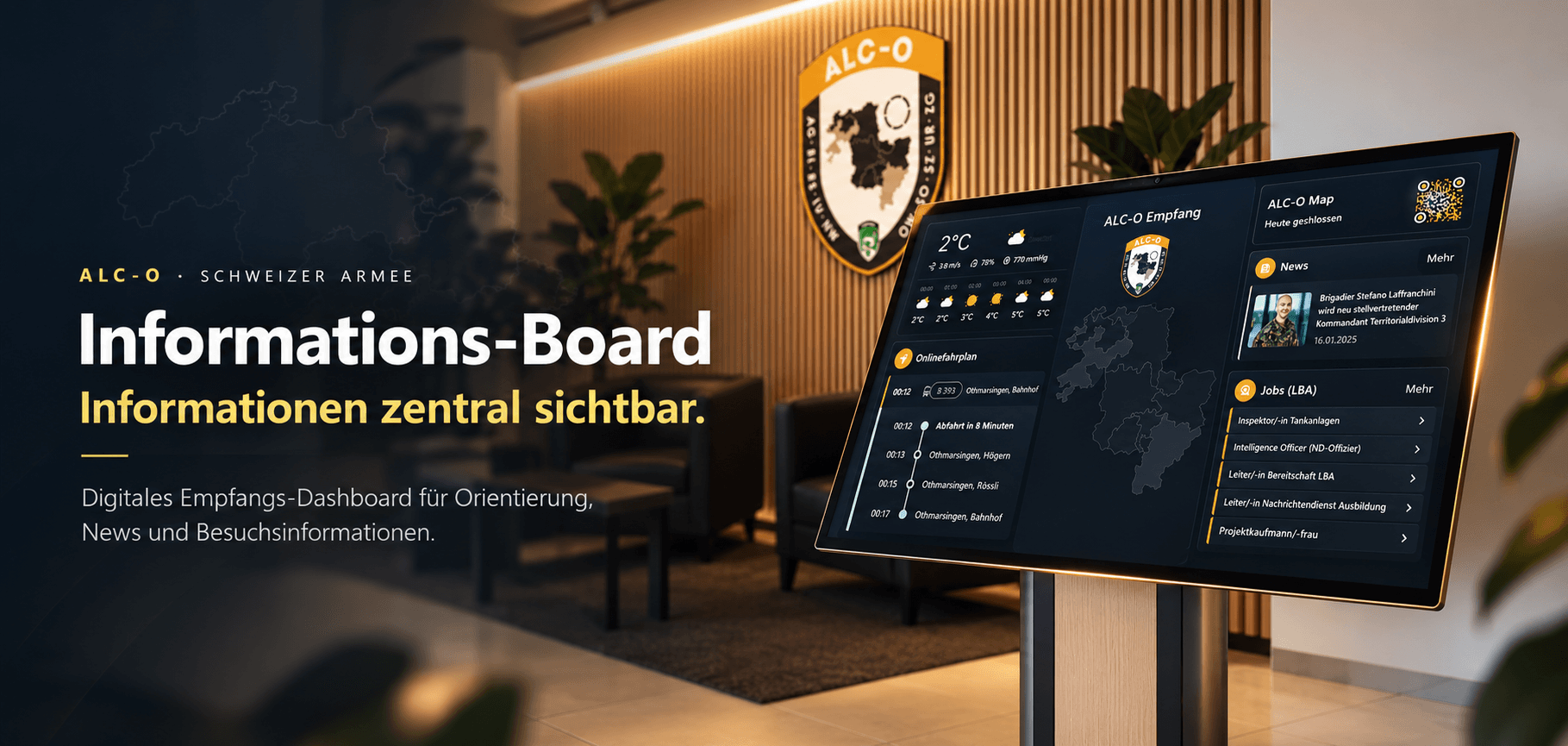
Project period (concept to go-live): 04/2023–05/2024. On-site installation and trial operation: 01/2024. First successful go-live including telephony and associated acceptance: 05/2024.
“One glance, and everyone knows where to go.”
The story
The idea came from the need to make the entrance of a complex logistics center more user friendly and informative. Visitors used to rely on static boards and asking staff, which often led to delays.
Working with the team on site, it quickly became clear: the screen does not only need to help visitors, it also has to feel pleasant for the employees who see it every day. That is why the focus was on a calm, clear design with the campus map at the center instead of a crowded interface.
Phone calls right from the kiosk
The key feature for visitors is the "Call contact person" button. Anyone standing at reception who needs help simply taps the screen and is connected directly to the right person. No own phone needed, no searching for numbers, no waiting for someone to show up.
Technically, the call runs through a GSM module on a Raspberry Pi, controlled by Python scripts and connected to the NestJS backend. This turns the kiosk from a simple info screen into a real digital reception that connects visitors and staff in seconds.
Implementation
- Backend: Node.js with NestJS for a scalable and robust API
- Database: TypeORM for efficient and type safe data management
- Frontend: Angular for a dynamic and user friendly interface
- Kiosk: Electron, so the app runs full screen, stable and locked down without browser elements
- IoT: A Raspberry Pi with a GSM module handles phone calls. Python scripts control the module and connect to the NestJS backend, so a tap on the screen starts a call directly.
External data such as weather and public transport is pulled in via APIs and refreshed regularly. The modular widget architecture makes it easy to add new content without rebuilding the app. Automatic data updates and robust offline capability ensure maximum reliability in daily operations.